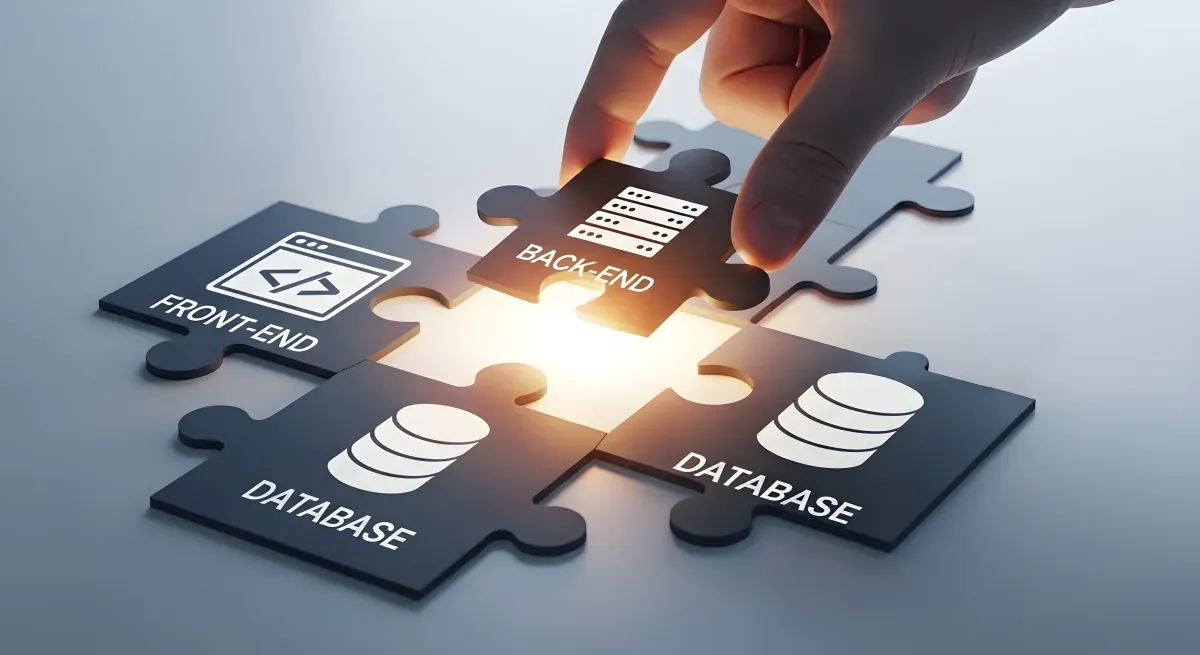
Warum Backend-Architektur über Erfolg oder Scheitern entscheidet
Ein schlecht designtes Backend führt zu langsamen Antwortzeiten, Ausfällen bei Spitzenlast und hohen Infrastrukturkosten. Teams mit modularem Design deployen Updates 30% schneller, während statuslose Designs die Skalierbarkeit um 70% steigern. API-first Design beschleunigt die Entwicklung um 50%, und KI-gestützte Echtzeit-Monitoring-Tools senken die Betriebskosten um 20-25%.
Für B2B-Kunden bedeutet das: Schnellere Time-to-Market, planbare Kosten und ein System, das mit dem Geschäft mitwächst statt es zu bremsen.
Backend-as-a-Service vs. Custom Backend: Die strategische Entscheidung
Bei jedem neuen Projekt ist eine der kritischsten Entscheidungen die Wahl zwischen einer Backend-as-a-Service (BaaS) Lösung und einer maßgeschneiderten Backend-Architektur. Während BaaS-Plattformen schnelles Prototyping ermöglichen, erfordern komplexe Geschäftsanforderungen oft die Flexibilität und Kontrolle einer individuell entwickelten Lösung.
BaaS-Lösungen für schnelles Prototyping: Firebase und Supabase
Für MVPs, Proof-of-Concepts und die schnelle Validierung von Geschäftsideen können Backend-as-a-Service-Plattformen die Entwicklung erheblich beschleunigen.
Firebase: Schnellstart für Mobile-First-Prototypen
Firebase ist eine von Google verwaltete Backend-Plattform, die Cloud Firestore als dokumentenorientierte NoSQL-Datenbank, Authentifizierung, Cloud Storage und Cloud Functions für Backend-Logik umfasst.
Ideale Anwendungsfälle:- Schnelle MVP-Entwicklung (2-4 Wochen bis zum Markt)
- Mobile-first Consumer-Apps mit Real-Time-Features
- Proof-of-Concept-Validierung
- Startups beim Testen des Product-Market-Fit
- Apps mit unkomplizierten Datenmodellen
- Vendor Lock-in erschwert Migration bei wachsenden Anforderungen
- Komplexe Geschäftslogik wird schwer wartbar
- NoSQL-Struktur limitiert komplexe Datenbeziehungen
- Kosten können bei Skalierung unvorhersehbar steigen
- Begrenzte Kontrolle über Infrastruktur und Performance-Optimierung
Supabase: Open-Source-Alternative für SQL-basierte Prototypen
Supabase ist eine Open-Source-Backend-Plattform, die auf PostgreSQL läuft und mehr Flexibilität als Firebase bietet, während schnelle Entwicklungsmöglichkeiten erhalten bleiben.
Ideale Anwendungsfälle:- Prototypen mit relationalen Datenstrukturen
- Projekte, bei denen Vendor Lock-in ein Problem darstellt
- Teams mit SQL-Expertise
- Anwendungen, die von Anfang an komplexe Queries benötigen
- Abstrahiert weiterhin kritische Infrastruktur-Kontrolle
- Begrenzte Anpassungsmöglichkeiten für komplexe Geschäftsanforderungen
- Nicht für hochspezialisierte Use Cases konzipiert
- Performance-Optimierungsmöglichkeiten sind eingeschränkt
Custom Backend-Architektur: Die Enterprise-Grade-Lösung
Für komplexe B2B-Anwendungen, Enterprise-Systeme und Produkte mit spezifischen Geschäftsanforderungen bietet eine maßgeschneiderte Backend-Architektur die nötige Flexibilität, Performance und Kontrolle für langfristigen Erfolg.
Wann ein Custom Backend die richtige Wahl ist:Komplexe Geschäftslogik:- Multi-Tenant-Architekturen mit isolierten Datenanforderungen
- Branchenspezifische Compliance- und Regulierungsanforderungen
- Ausgefeilte Workflow-Engines und Geschäftsprozess-Automatisierung
- Custom Algorithmen und proprietäre Geschäftslogik
- High-Traffic-Anwendungen mit fein abgestimmter Performance
- Microservices-Architekturen für unabhängige Skalierung
- Custom Caching-Strategien für spezifische Datenzugriffsmuster
- Optimierte Datenbank-Schemas für komplexe Queries
- Legacy-System-Integrationen
- Orchestrierung mehrerer Drittanbieter-APIs
- Custom Data-Transformation-Pipelines
- Enterprise Service Bus (ESB) Patterns
- Vollständige Infrastruktur-Ownership und Anpassungsfähigkeit
- Flexibilität beim Technology Stack (beste Tools für jede Komponente)
- Unabhängige Skalierung verschiedener Systemkomponenten
- Kein Vendor Lock-in oder Plattform-Limitierungen
- Branchenspezifische Sicherheitsanforderungen (Finanzen, Gesundheit, Behörden)
- Custom Verschlüsselung und Datenverarbeitungs-Policies
- Granulares Audit-Logging und Compliance-Reporting
- Cloud & On-Premise. EU Data Hosting.
Der Hybrid-Ansatz: Das Beste aus beiden Welten
Bei IntegrIT Solutions implementieren wir häufig eine Hybrid-Architektur, die die Stärken beider Ansätze kombiniert:
Firebase Authentication + Custom Backend: Die gewinnbringende Kombination
Eines der leistungsstärksten Patterns, die wir erfolgreich für mobile und Web-Anwendungen eingesetzt haben, ist die Verwendung von Firebase Authentication als Identity-Layer, während die gesamte Geschäftslogik über ein Custom Backend läuft.
Architektur-Pattern:Warum das funktioniert:Firebase übernimmt die Authentifizierung:- Battle-tested Authentication-Flows (Email, Social, Phone, MFA)
- Cross-Platform-SDKs für iOS, Android und Web
- Automatische Token-Refresh und Session-Management
- Integrierte Security Rules und Rate Limiting für Auth-Endpoints
- Reduziert Entwicklungszeit für Authentifizierungs-Features um 40-60%
- Volle Kontrolle über Datenmodelle und Geschäftsprozesse
- Komplexe Autorisierungsregeln über einfache Authentifizierung hinaus
- Integration mit bestehenden Enterprise-Systemen
- Custom API-Endpoints optimiert für Ihren Use Case
- Flexibles Datenbank-Schema, das mit Anforderungen mitwächst
- Performance-Optimierung für spezifische Workloads
- Schnellere Time-to-Market (Authentication in Tagen statt Wochen fertig)
- Enterprise-Grade Auth-Sicherheit ohne das Rad neu zu erfinden
- Volle Flexibilität für komplexe Geschäftsanforderungen
- Einfacher Migrationspfad (Auth-Layer bleibt, Backend kann sich entwickeln)
- Kostenoptimierung (für Managed Auth zahlen, Backend-Infrastruktur optimieren)
Custom Backend Technology Stack: Moderne Best Practices
Beim Aufbau eines Custom Backends sollten Technologie-Entscheidungen an Ihren spezifischen Anforderungen ausgerichtet sein, nicht an Trends.
Sprach- und Framework-Auswahl
Node.js/TypeScript:- Exzellent für Real-Time-Anwendungen und Microservices
- Großes Ecosystem und Developer-Verfügbarkeit
- Event-driven Architektur für I/O-lastige Workloads
- Frameworks: NestJS (Enterprise), Express (Lightweight), Fastify (Performance)
- Ideal für datenintensive Anwendungen und ML-Integration
- Stark in Fintech, Healthcare und Data Analytics
- Frameworks: FastAPI (modern, async), Django (batteries-included), Flask (flexibel)
- Überlegene Performance für High-Throughput-Systeme
- Exzellentes Concurrency-Handling
- Geringerer Ressourcenverbrauch
- Frameworks: Gin, Echo, Fiber
- Enterprise-Grade Stabilität und Reife
- Exzellent für komplexe transaktionale Systeme
- Strong Typing und Tooling
- Am besten für Large-Scale Enterprise-Anwendungen
Datenbank-Architektur
Relationale Datenbanken (PostgreSQL, MySQL):- Komplexe Datenbeziehungen
- ACID-Compliance für Finanztransaktionen
- Erweiterte Query-Fähigkeiten
- Ausgereiftes Tooling und Expertise
- Flexible Schemas für sich entwickelnde Datenmodelle
- Horizontale Skalierbarkeit für massive Datasets
- Hoher Write-Durchsatz
- Dokumentenbasierte Daten, die nicht in relationale Modelle passen
Viele Custom Backends profitieren von Polyglot Persistence – der richtigen Datenbank für jeden Use Case:
- PostgreSQL für transaktionale Daten
- Redis für Caching und Session Storage
- Elasticsearch für Volltext-Suche
- MongoDB für flexibles Content Management
Skalierbarkeit in Custom Backend-Architektur
Custom Backends bieten unübertroffene Flexibilität bei der Implementierung von Skalierungs-Strategien.
Microservices-Architektur für unabhängige Skalierung
Die Aufteilung Ihres Backends in unabhängige Services ermöglicht präzise Skalierung basierend auf tatsächlichem Bedarf:
Service-Trennung:- User Service (Authentifizierung, Profile)
- Payment Service (Transaktionen, Abrechnung)
- Notification Service (Emails, Push, SMS)
- Analytics Service (Reporting, Datenverarbeitung)
- Media Service (Upload, Verarbeitung, CDN)
- Skalierung nur der Services, die es benötigen
- Unabhängige Updates ohne vollständige System-Downtime
- Technologie-Diversität (bestes Tool für jeden Service)
- Fehler-Isolation (Ausfall eines Service stürzt nicht das System ab)
- Team-Autonomie (verschiedene Teams besitzen verschiedene Services)
Containerisierung und Orchestrierung
Docker für Konsistenz:- Identische Umgebungen von Development bis Production
- Einfaches Dependency-Management
- Schnelles Deployment und Rollback
- Effiziente Ressourcen-Nutzung
- Automatische Skalierung basierend auf CPU, Memory oder Custom Metrics
- Self-Healing (automatischer Neustart fehlgeschlagener Container)
- Rolling Updates mit Zero Downtime
- Multi-Cloud-Portabilität
Serverless-Komponenten für variable Workloads
Selbst innerhalb von Custom Backend-Architekturen können Serverless Functions bestimmte Workloads effizient handhaben:
Ideale Serverless Use Cases:- Bild-/Video-Verarbeitungs-Pipelines
- Geplante Report-Generierung
- Webhook-Handler
- Email-/Notification-Versand
- Datentransformations-Jobs
Der Serverless-Architektur-Markt wächst von 14,57 Milliarden Dollar in 2024 auf 17,88 Milliarden Dollar in 2025 mit einer CAGR von 22,8%, was seinen Wert selbst in Custom-Architekturen demonstriert.
Caching-Strategien für Performance
Custom Backends erlauben ausgefeilte Caching-Implementierungen:
Multi-Layer-Caching:- Application-Level-Caching (In-Memory, Process-Level)
- Distributed Caching (Redis, Memcached)
- Datenbank-Query-Result-Caching
- CDN für statische Assets und API-Responses
Sicherheit und Compliance in Custom Backends
Custom Backends bieten die granulare Kontrolle, die für komplexe Sicherheits- und Compliance-Anforderungen erforderlich ist.
Branchenspezifische Compliance
Gesundheitswesen (HIPAA):- Verschlüsselte Daten im Ruhezustand und während der Übertragung
- Umfassendes Audit-Logging
- Zugriffskontrollen und rollenbasierte Berechtigungen
- Datenaufbewahrungs- und Lösch-Policies
- Business Associate Agreements (BAA) Compliance
- Tokenisierung sensibler Zahlungsdaten
- Sicheres Key-Management
- Netzwerk-Segmentierung
- Regelmäßige Penetrationstests
- Compliance-Reporting-Automatisierung
- Recht auf Zugang (Datenexport)
- Recht auf Löschung (Datenentfernung)
- Datenverarbeitungsvereinbarungen
- Privacy by Design
- Grenzüberschreitender Datentransfer-Compliance
Erweiterte Sicherheits-Patterns
API-Sicherheit:- JWT-basierte Authentifizierung mit Firebase Token-Validierung
- API Rate Limiting und Throttling
- Input Validation und Sanitization
- SQL-Injection- und XSS-Prävention
- CORS und Security Headers
- Service-to-Service-Authentifizierung
- Mutual TLS (mTLS) für interne Kommunikation
- Netzwerk-Segmentierung und Micro-Segmentierung
- Principle of Least Privilege
- Kontinuierliche Verifizierung
- TLS 1.3 für Daten während der Übertragung
- AES-256-Verschlüsselung für Daten im Ruhezustand
- Field-Level-Verschlüsselung für sensible Daten
- Key-Rotation-Policies
- Hardware Security Modules (HSM) für kritische Keys
Infrastructure as Code und DevOps Excellence
Custom Backends profitieren immens von modernen DevOps-Praktiken.
Infrastructure as Code (IaC)
Terraform:- Multi-Cloud-Infrastruktur-Management
- Versionskontrollierte Infrastruktur
- Reproduzierbare Umgebungen
- Infrastruktur-Drift-Erkennung
- Identische Staging- und Production-Umgebungen deployen
- Infrastruktur-Peer-Review durch Code-Review
- Disaster Recovery durch Infrastruktur-Redeployment
- Dokumentation durch Code
CI/CD-Pipelines
Automatisiertes Testing:- Unit Tests (80%+ Code Coverage)
- Integration Tests
- End-to-End Tests
- Performance Tests
- Security Scanning
- Automatisierte Builds bei Code-Commit
- Blue-Green-Deployments für Zero Downtime
- Automatisches Rollback bei Fehler-Erkennung
- Canary Releases zur Risikominderung
- 90% Reduktion von Deployment-Fehlern
- Deployment-Zeit: 2 Stunden → 10 Minuten
- Mean Time to Recovery (MTTR): 2 Stunden → 15 Minuten
Observability und Monitoring
Umfassender Monitoring-Stack:- Metrics: Prometheus, Grafana
- Logs: ELK Stack (Elasticsearch, Logstash, Kibana)
- Tracing: Jaeger, OpenTelemetry
- APM: New Relic, Datadog, Dynatrace
- Anomalie-Erkennung mit ML
- SLA/SLO-Monitoring
- Business-Metrics-Tracking
- Kosten-Monitoring und Optimierungs-Alerts
Der IntegrIT Solutions Ansatz: Custom Backends, die skalieren
Nach 10 Jahren Erfahrung im Bau von Backend-Systemen für B2B-Kunden kombiniert unser Ansatz bewährte Patterns mit modernen Best Practices.
Unsere Entwicklungs-Philosophie
1. Business-First-Architektur:- Tiefes Verständnis Ihres Geschäftsmodells
- Technische Entscheidungen getrieben durch Geschäftsanforderungen
- ROI-fokussierte Technologie-Auswahl
- Skalierungsplanung basierend auf Wachstumsprognosen
- Microservices wo sinnvoll
- Klare Separation of Concerns
- API-first Design für Flexibilität
- Technologie-agnostische Interfaces
- Datenbank-Optimierung von Anfang an
- Integrierte Caching-Strategien
- Load Testing vor Production
- Kontinuierliches Performance-Monitoring
- Security von Tag eins integriert
- Regelmäßige Security-Audits
- Compliance-Anforderungen in Architektur eingebettet
- Automatisiertes Security-Testing
Typische Custom Backend-Architektur
Entscheidungs-Framework: BaaS vs. Custom Backend
Wählen Sie BaaS (Firebase/Supabase) wenn:
- Sie einen MVP oder Proof-of-Concept bauen
- Timeline 4-8 Wochen beträgt
- Einfache bis moderate Datenbeziehungen vorliegen
- Teamgröße unter 5 Entwickler liegt
- Budget-Constraints minimales Infrastruktur-Management erfordern
- Standard-Authentifizierung und grundlegende CRUD-Operationen ausreichen
Wählen Sie Custom Backend wenn:
- Komplexe Geschäftslogik und Workflows erforderlich sind
- Branchenspezifische Compliance-Anforderungen vorliegen (HIPAA, PCI-DSS, SOC 2)
- High-Traffic-Anwendungen (100.000+ tägliche aktive Nutzer) geplant sind
- Integration mit Legacy-Systemen oder mehreren Drittanbieter-Services nötig ist
- Performance-Optimierung und Fine-Tuning erforderlich sind
- Langfristiges Produkt mit sich entwickelnden Anforderungen entsteht
- Multi-Tenant-Architekturen mit Datenisolierung benötigt werden
- Proprietäre Algorithmen oder geistiges Eigentum geschützt werden soll
Wählen Sie Hybrid-Ansatz wenn:
- Schnelle Auth-Implementierung aber komplexe Geschäftslogik benötigt wird
- Mobile/Web-Apps Cross-Platform-Auth-Konsistenz erfordern
- Auth-Entwicklungszeit reduziert werden soll bei gleichzeitiger Backend-Kontrolle
- Business-Logik unabhängig von User-Management skaliert werden soll
- Sowohl Speed-to-Market als auch langfristige Flexibilität benötigt werden
Kosten-Überlegungen: Total Cost of Ownership
BaaS-Kosten:
- Niedrige Anfangsinvestition
- Pay-as-you-grow-Preismodell
- Kosten können mit Nutzung unvorhersehbar steigen
- Begrenzte Optimierungsmöglichkeiten
- Vendor-Preiserhöhungen beeinflussen Ihre Marge
Custom Backend-Kosten:
- Höhere initiale Entwicklungsinvestition
- Vorhersehbare Infrastrukturkosten
- Optimierungsmöglichkeiten reduzieren langfristige Kosten
- Volle Kontrolle über Kostenstruktur
- Typischer ROI-Breakeven bei 12-18 Monaten
Fazit: Backend-Architektur als strategische Investition
Die Wahl zwischen BaaS und Custom Backend ist nicht binär – sie ist strategisch. Für schnelles Prototyping und MVPs bieten Plattformen wie Firebase und Supabase unschlagbare Geschwindigkeit. Für komplexe B2B-Anwendungen mit spezifischen Anforderungen bietet ein Custom Backend die Kontrolle, Performance und Skalierbarkeit, die für langfristigen Erfolg benötigt wird.
Bei IntegrIT Solutions spezialisieren wir uns auf Custom Backend-Architekturen, die kombinieren:
- Firebase Authentication für zuverlässiges, plattformübergreifendes User-Management
- Maßgeschneiderte Microservices für komplexe Geschäftslogik
- Skalierbare Infrastruktur, die mit Ihrem Business wächst
- Security und Compliance von Tag eins eingebaut
Die richtige Backend-Architektur heute bedeutet:
- 50-70% niedrigere langfristige Infrastrukturkosten
- 30% schnellere Feature-Entwicklung mit richtiger Architektur
- 99,9%+ Uptime durch robustes Design
- Skalierbarkeit ohne Re-Architektur
Nächste Schritte: Custom Backend-Beratung
Planen Sie eine neue Anwendung oder wachsen Sie aus Ihrer aktuellen BaaS-Lösung heraus?
IntegrIT Solutions bietet:- Kostenlose Backend-Architektur-Beratung (45 Min.)
- Technische Machbarkeits-Bewertung
- BaaS vs. Custom Backend Kosten-Nutzen-Analyse
- Architektur-Design und Technologie-Stack-Empfehlung
- Proof-of-Concept-Entwicklung
Kontaktieren Sie uns für ein unverbindliches Gespräch – gemeinsam designen wir die Backend-Architektur, die Ihr Geschäftswachstum antreibt.

IntegrIT Solutions
Ihr Partner für hochwertige mobile Anwendungen
E-Mail: info@integritsol.de
Über IntegrIT Solutions
IntegrIT Solutions ist Ihre spezialisierte Software-Agentur für die Entwicklung performanter mobiler Anwendungen. Mit fundierter Erfahrung in der Entwicklung von Business-Apps für B2B-Kunden verbinden wir technische Kompetenz mit geschäftlichem Verständnis. Unsere Apps sind zuverlässig, benutzerfreundlich und liefern messbare Geschäftsergebnisse.