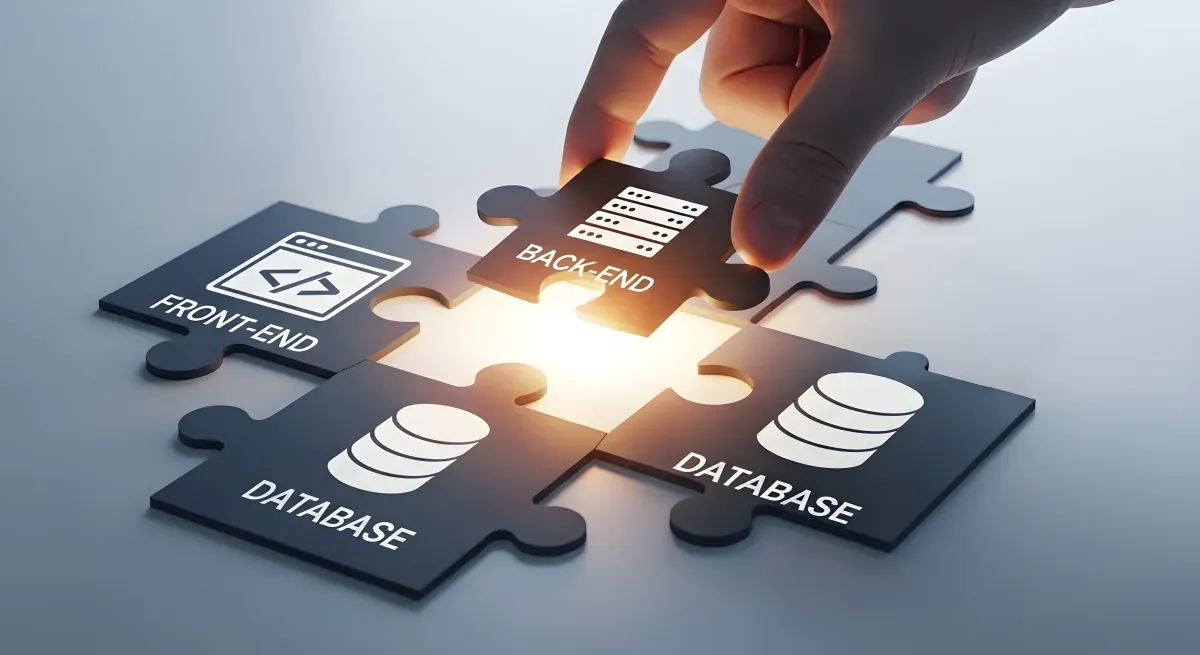
Why Backend Architecture Determines Success or Failure
A poorly designed backend leads to slow response times, outages during peak load, and high infrastructure costs. Teams with modular design deploy updates 30% faster, while stateless designs increase scalability by 70%. API-first design accelerates development by 50%, and AI-powered real-time monitoring tools reduce operational costs by 20-25%.
For B2B clients, this means: Faster time-to-market, predictable costs, and a system that grows with the business instead of slowing it down.
Backend-as-a-Service vs. Custom Backend: Making the Strategic Choice
When starting a new project, one of the most critical decisions is choosing between a Backend-as-a-Service (BaaS) solution and a custom backend architecture. While BaaS platforms offer rapid prototyping capabilities, complex business requirements often demand the flexibility and control of a custom-built solution.
BaaS Solutions for Rapid Prototyping: Firebase and Supabase
For MVPs, proof-of-concepts, and rapid validation of business ideas, Backend-as-a-Service platforms can significantly accelerate development.
Firebase: Quick Start for Mobile-First Prototypes
Firebase is a Google-managed backend platform that includes Cloud Firestore as a document-oriented NoSQL database, authentication, Cloud Storage, and Cloud Functions for backend logic.
Ideal Use Cases:- Rapid MVP development (2-4 weeks to market)
- Mobile-first consumer apps with real-time features
- Proof-of-concept validation
- Startups testing product-market fit
- Apps with straightforward data models
- Vendor lock-in makes migration difficult as requirements grow
- Complex business logic becomes hard to maintain
- NoSQL structure limits complex data relationships
- Costs can escalate unpredictably with scale
- Limited control over infrastructure and performance optimization
Supabase: Open-Source Alternative for SQL-Based Prototypes
Supabase is an open-source backend platform that runs on PostgreSQL, offering more flexibility than Firebase while maintaining rapid development capabilities.
Ideal Use Cases:- Prototypes requiring relational data structures
- Projects where vendor lock-in is a concern
- Teams with SQL expertise
- Applications requiring complex queries from the start
- Still abstract away critical infrastructure control
- Limited customization for complex business requirements
- Not designed for highly specialized use cases
- Performance optimization options are constrained
Custom Backend Architecture: The Enterprise-Grade Solution
For complex B2B applications, enterprise systems, and products with specific business requirements, a custom backend architecture provides the flexibility, performance, and control needed for long-term success.
When Custom Backend is the Right Choice:Complex Business Logic:- Multi-tenant architectures with isolated data requirements
- Industry-specific compliance and regulatory requirements
- Sophisticated workflow engines and business process automation
- Custom algorithms and proprietary business logic
- High-traffic applications requiring fine-tuned performance
- Microservices architectures for independent scaling
- Custom caching strategies for specific data access patterns
- Optimized database schemas for complex queries
- Legacy system integrations
- Multiple third-party API orchestration
- Custom data transformation pipelines
- Enterprise service bus (ESB) patterns
- Full infrastructure ownership and customization
- Technology stack flexibility (choose best tools for each component)
- Independent scaling of different system components
- No vendor lock-in or platform limitations
- Industry-specific security requirements (finance, healthcare, government)
- Custom encryption and data handling policies
- Granular audit logging and compliance reporting
- Cloud & On-premise. EU Data Hosting.
The Hybrid Approach: Best of Both Worlds
At IntegrIT Solutions, we frequently implement a hybrid architecture that combines the strengths of both approaches:
Firebase Authentication + Custom Backend: The Winning Combination
One of the most powerful patterns we've successfully deployed for mobile and web applications is using Firebase Authentication as the identity layer while routing all business logic through a custom backend.
Architecture Pattern:Why This Works:Firebase Handles Authentication:- Battle-tested authentication flows (email, social, phone, MFA)
- Cross-platform SDKs for iOS, Android, and Web
- Automatic token refresh and session management
- Built-in security rules and rate limiting for auth endpoints
- Reduces development time by 40-60% for authentication features
- Full control over data models and business processes
- Complex authorization rules beyond simple authentication
- Integration with existing enterprise systems
- Custom API endpoints optimized for your use case
- Flexible database schema that evolves with requirements
- Performance optimization for specific workloads
- Faster time-to-market (authentication ready in days, not weeks)
- Enterprise-grade auth security without reinventing the wheel
- Full flexibility for complex business requirements
- Easy migration path (auth layer stays, backend can evolve)
- Cost optimization (pay for managed auth, optimize backend infrastructure)
Custom Backend Technology Stack: Modern Best Practices
When building a custom backend, technology choices should align with your specific requirements rather than following trends.
Language and Framework Selection
Node.js/TypeScript:- Excellent for real-time applications and microservices
- Large ecosystem and developer availability
- Event-driven architecture for I/O-heavy workloads
- Frameworks: NestJS (enterprise), Express (lightweight), Fastify (performance)
- Ideal for data-intensive applications and ML integration
- Strong in fintech, healthcare, and data analytics
- Frameworks: FastAPI (modern, async), Django (batteries-included), Flask (flexible)
- Superior performance for high-throughput systems
- Excellent concurrency handling
- Lower resource consumption
- Frameworks: Gin, Echo, Fiber
- Enterprise-grade stability and maturity
- Excellent for complex transactional systems
- Strong typing and tooling
- Best for large-scale enterprise applications
Database Architecture
Relational Databases (PostgreSQL, MySQL):- Complex data relationships
- ACID compliance for financial transactions
- Advanced querying capabilities
- Mature tooling and expertise
- Flexible schemas for evolving data models
- Horizontal scalability for massive datasets
- High write throughput
- Document-based data that doesn't fit relational models
Many custom backends benefit from polyglot persistence – using the right database for each use case:
- PostgreSQL for transactional data
- Redis for caching and session storage
- Elasticsearch for full-text search
- MongoDB for flexible content management
Scalability in Custom Backend Architecture
Custom backends provide unmatched flexibility in implementing scalability strategies.
Microservices Architecture for Independent Scaling
Breaking your backend into independent services allows precise scaling based on actual demand:
Service Separation:- User Service (authentication, profiles)
- Payment Service (transactions, billing)
- Notification Service (emails, push, SMS)
- Analytics Service (reporting, data processing)
- Media Service (upload, processing, CDN)
- Scale only the services that need it
- Deploy updates independently without full system downtime
- Technology diversity (use best tool for each service)
- Fault isolation (one service failure doesn't crash the system)
- Team autonomy (different teams own different services)
Containerization and Orchestration
Docker for Consistency:- Identical environments from development to production
- Easy dependency management
- Rapid deployment and rollback
- Efficient resource utilization
- Automatic scaling based on CPU, memory, or custom metrics
- Self-healing (automatic restart of failed containers)
- Rolling updates with zero downtime
- Multi-cloud portability
Serverless Components for Variable Workloads
Even within custom backend architectures, serverless functions can handle specific workloads efficiently:
Ideal Serverless Use Cases:- Image/video processing pipelines
- Scheduled report generation
- Webhook handlers
- Email/notification sending
- Data transformation jobs
The serverless architecture market is growing from $14.57 billion in 2024 to $17.88 billion in 2025, with a CAGR of 22.8%, demonstrating its value even in custom architectures.
Caching Strategies for Performance
Custom backends allow sophisticated caching implementations:
Multi-Layer Caching:- Application-level caching (in-memory, process-level)
- Distributed caching (Redis, Memcached)
- Database query result caching
- CDN for static assets and API responses
Security and Compliance in Custom Backends
Custom backends provide the granular control needed for complex security and compliance requirements.
Industry-Specific Compliance
Healthcare (HIPAA):- Encrypted data at rest and in transit
- Comprehensive audit logging
- Access controls and role-based permissions
- Data retention and deletion policies
- Business Associate Agreements (BAA) compliance
- Tokenization of sensitive payment data
- Secure key management
- Network segmentation
- Regular penetration testing
- Compliance reporting automation
- Right to access (data export)
- Right to deletion (data removal)
- Data processing agreements
- Privacy by design
- Cross-border data transfer compliance
Advanced Security Patterns
API Security:- JWT-based authentication with Firebase tokens validation
- API rate limiting and throttling
- Input validation and sanitization
- SQL injection and XSS prevention
- CORS and security headers
- Service-to-service authentication
- Mutual TLS (mTLS) for internal communication
- Network segmentation and micro-segmentation
- Principle of least privilege
- Continuous verification
- TLS 1.3 for data in transit
- AES-256 encryption for data at rest
- Field-level encryption for sensitive data
- Key rotation policies
- Hardware security modules (HSM) for critical keys
Infrastructure as Code and DevOps Excellence
Custom backends benefit immensely from modern DevOps practices.
Infrastructure as Code (IaC)
Terraform:- Multi-cloud infrastructure management
- Version-controlled infrastructure
- Reproducible environments
- Infrastructure drift detection
- Deploy identical staging and production environments
- Infrastructure peer review through code review
- Disaster recovery through infrastructure redeployment
- Documentation through code
CI/CD Pipelines
Automated Testing:- Unit tests (80%+ code coverage)
- Integration tests
- End-to-end tests
- Performance tests
- Security scanning
- Automated builds on code commit
- Blue-green deployments for zero downtime
- Automatic rollback on failure detection
- Canary releases for risk mitigation
- 90% reduction in deployment errors
- Deployment time: 2 hours → 10 minutes
- Mean time to recovery (MTTR): 2 hours → 15 minutes
Observability and Monitoring
Comprehensive Monitoring Stack:- Metrics: Prometheus, Grafana
- Logs: ELK Stack (Elasticsearch, Logstash, Kibana)
- Tracing: Jaeger, OpenTelemetry
- APM: New Relic, Datadog, Dynatrace
- Anomaly detection with ML
- SLA/SLO monitoring
- Business metrics tracking
- Cost monitoring and optimization alerts
The IntegrIT Solutions Approach: Custom Backends that Scale
After 10 years of building backend systems for B2B clients, our approach combines proven patterns with modern best practices.
Our Development Philosophy
1. Business-First Architecture:- Deep understanding of your business model
- Technical decisions driven by business requirements
- ROI-focused technology choices
- Scalability planning based on growth projections
- Microservices where it makes sense
- Clean separation of concerns
- API-first design for flexibility
- Technology-agnostic interfaces
- Database optimization from the start
- Caching strategies built-in
- Load testing before production
- Continuous performance monitoring
- Security integrated from day one
- Regular security audits
- Compliance requirements embedded in architecture
- Automated security testing
Typical Custom Backend Architecture
Decision Framework: BaaS vs. Custom Backend
Choose BaaS (Firebase/Supabase) When:
- Building an MVP or proof-of-concept
- Timeline is 4-8 weeks
- Simple to moderate data relationships
- Team size under 5 developers
- Budget constraints require minimal infrastructure management
- Standard authentication and basic CRUD operations suffice
Choose Custom Backend When:
- Complex business logic and workflows
- Industry-specific compliance requirements (HIPAA, PCI-DSS, SOC 2)
- High-traffic applications (100,000+ daily active users)
- Integration with legacy systems or multiple third-party services
- Need for performance optimization and fine-tuning
- Long-term product with evolving requirements
- Multi-tenant architectures with data isolation
- Proprietary algorithms or intellectual property
Choose Hybrid Approach When:
- Need fast authentication implementation but complex business logic
- Mobile/web apps requiring cross-platform auth consistency
- Want to reduce auth development time while maintaining backend control
- Plan to scale business logic independently from user management
- Require both speed-to-market and long-term flexibility
Cost Considerations: Total Cost of Ownership
BaaS Costs:
- Low initial investment
- Pay-as-you-grow pricing
- Costs can escalate unpredictably with usage
- Limited optimization opportunities
- Vendor price increases affect your bottom line
Custom Backend Costs:
- Higher initial development investment
- Predictable infrastructure costs
- Optimization opportunities reduce long-term costs
- Full control over cost structure
- Typical ROI breakeven at 12-18 months
Conclusion: Backend Architecture as Strategic Investment
The choice between BaaS and custom backend isn't binary – it's strategic. For rapid prototyping and MVPs, platforms like Firebase and Supabase offer unmatched speed. For complex B2B applications with specific requirements, a custom backend provides the control, performance, and scalability needed for long-term success.
At IntegrIT Solutions, we specialize in custom backend architectures that combine:
- Firebase Authentication for reliable, cross-platform user management
- Custom-built microservices for complex business logic
- Scalable infrastructure that grows with your business
- Security and compliance built-in from day one
The right backend architecture today means:
- 50-70% lower long-term infrastructure costs
- 30% faster feature development with proper architecture
- 99.9%+ uptime through robust design
- Scalability without re-architecture
Next Steps: Custom Backend Consultation
Planning a new application or outgrowing your current BaaS solution?
IntegrIT Solutions offers:- Free backend architecture consultation (45 min.)
- Technical feasibility assessment
- BaaS vs. custom backend cost-benefit analysis
- Architecture design and technology stack recommendation
- Proof-of-concept development
Contact us for a no-obligation conversation – together we'll design the backend architecture that powers your business growth.

IntegrIT Solutions
Your Partner for High-Quality Mobile Applications
Email: info@integritsol.de
About IntegrIT Solutions
IntegrIT Solutions is your specialized software agency for developing performant mobile applications. With solid experience in developing business apps for B2B clients, we combine technical competence with business understanding. Our apps are reliable, user-friendly, and deliver measurable business results.